
A lot of local businesses think lead loss starts with the ad.
They assume weak results mean bad traffic, bad targeting, or low-quality leads.
Sometimes that is true.
But often, the real leak starts later.
After the click.
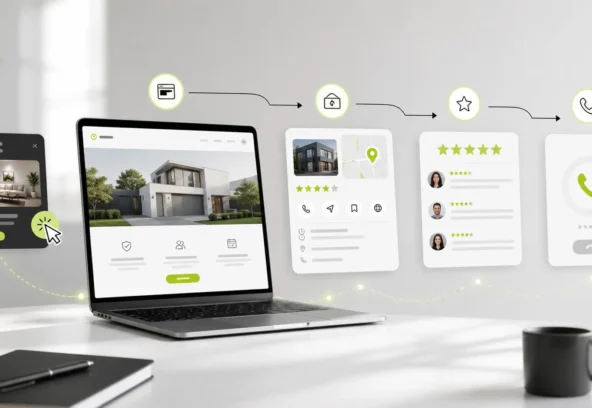
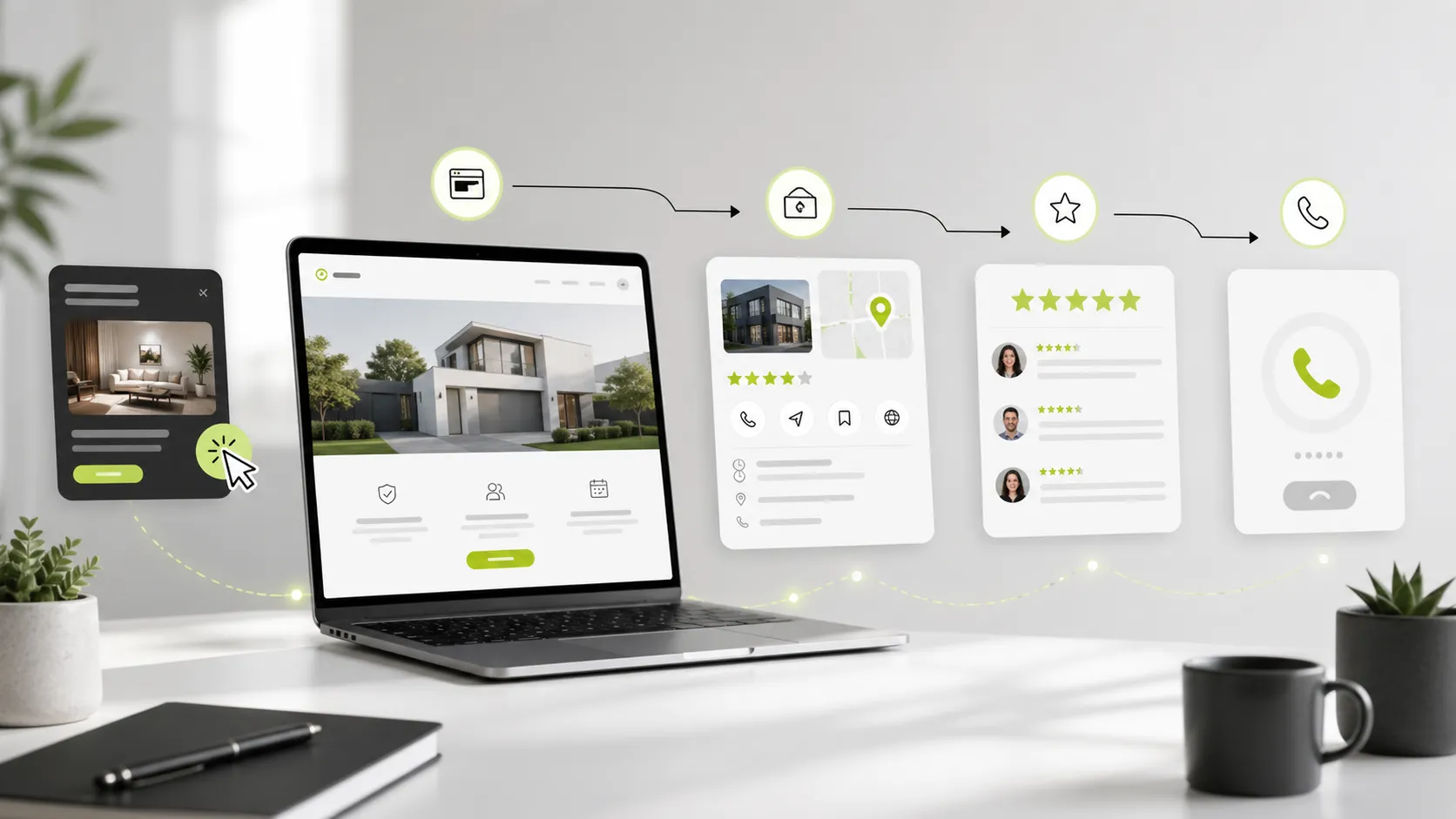
A prospect sees your ad.
They show interest.
They land on your website.
They check your Google profile.
They scan your reviews.
They compare you with other options.
They try to reach you.
And somewhere in that journey, they drop off.
Not because they were never interested.
Because something along the way made the business feel weaker, riskier, less clear, or harder to choose.
That is where many local businesses quietly lose good leads.
The click is not the decision
The click is only the start of the evaluation.
This is where many businesses misread what is happening.
They think:
“They clicked, so now it is just a matter of waiting for the call.”
But buyers do not usually work like that.
Especially in local services.
They do not click and commit.
They click and verify.
They want to know:
This whole process can happen in a few minutes.
Sometimes in less.
That means a business can attract attention successfully but still lose the lead during the decision phase.
The real buyer journey after the click
Let’s break down what often happens.
1. The website does not feel credible fast enough
The ad has one main job:
Get the right person to pay attention and take the next step.
A good ad does that.
It gets the click.
It creates curiosity.
It opens the door.
But the ad does not carry the full sale by itself.
The moment someone clicks, the business now has to support the promise the ad made.
If the ad looks strong but the rest of the experience feels weaker, trust starts to break.
That is why the ad is only the entry point.
2. The website shapes the first real impression
Once the person lands on the website, the silent evaluation begins.
The buyer is asking themselves:
Most visitors do not read carefully.
They scan.
They react to layout, clarity, proof, messaging, photos, structure, and overall confidence.
A weak site can kill momentum fast.
This happens when the website feels:
That does not always create an obvious failure.
It often creates hesitation.
And hesitation is enough to lose the lead.
Why hesitation matters so much
Many local businesses do not lose leads because a prospect says “no.”
They lose leads because the prospect says “maybe later.”
Or says nothing at all.
Or keeps browsing.
Or opens another tab.
Or checks another business.
Or decides the next option feels safer.
That is why conversion friction is so expensive.
It does not always look dramatic.
It just quietly lowers the chance that interest turns into action.
1. The Google profile becomes the trust checkpoint
After checking the website, many buyers go to Google.
Sometimes before the website.
Sometimes after it.
Sometimes both.
They do this because Google feels like outside verification.
The buyer wants confirmation.
They look at:
This part matters more than many businesses think.
A business can run strong ads and still lose the lead here if the Google presence feels weak.
For example:
The buyer may never say this out loud.
But the feeling is simple:
“I’m not fully sure.”
And if they are not fully sure, they often keep looking.
2. Reviews reduce doubt or increase it
Reviews deserve their own section because they play a direct role in decision-making.
Buyers want proof.
Not just claims.
Not just nice-looking pages.
Not just polished ads.
Proof.
Reviews help answer questions like:
When reviews are strong, relevant, and recent, they reduce friction.
When reviews are weak, thin, mixed, or outdated, doubt stays alive.
That doubt matters.
Especially in local services where trust carries weight.
A homeowner hiring a service company, a patient considering a clinic, or a person looking for legal help is not just buying the service.
They are buying confidence in the provider.
That is why weak reviews do not just hurt reputation.
They hurt conversion.
3. The contact attempt is where high-intent leads are often lost
This is one of the biggest leaks.
A prospect has clicked.
Checked the website.
Checked Google.
Read reviews.
Stayed interested enough to reach out.
This is not a weak lead.
This is often a high-intent lead.
Then they call.
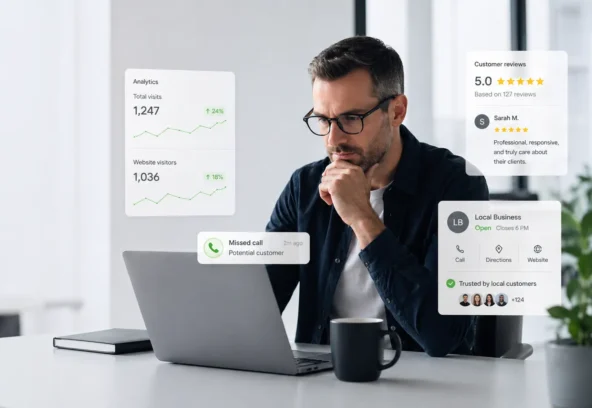
Nobody answers.
Or they call after hours and get no useful response.
Or they submit a form and wait too long.
Or the process feels unclear.
Or the business is simply too slow.
At this point, the problem is not traffic.
The problem is responsiveness.
And responsiveness is part of conversion.
Many businesses underestimate how much buying intent depends on timing.
When someone is ready, delay is dangerous.
Because local buyers usually do not contact one business and wait patiently forever.
They keep moving.
They call the next company.
They open the next listing.
They choose the business that feels available, responsive, and easy to deal with.
That is why missed calls are not just admin issues.
They are revenue leaks.
Why local businesses misdiagnose the problem
Many owners see poor lead volume or weak conversion and assume:
“We need more traffic.”
That feels logical because traffic is visible.
You can see clicks.
You can see spend.
You can see impressions.
But trust breaks and response failures are harder to see.
They do not always show up clearly in ad reports.
The platform may say the campaign is performing.
The click-through rate may be fine.
The cost per click may be acceptable.
But the business still feels disappointed.
Why?
Because the lead leak happened after the platform did its job.
That is the hidden cost.
The business pays for attention, but too much of that attention enters a weak decision path.
What lead loss after the click actually looks like
Here is what it sounds like in real life:
These are not always traffic problems.
Very often, they are journey problems.
The stronger question to ask
Instead of only asking:
“How do we get more clicks?”
Ask:
“What happens after people click?”
That question is much closer to the money.
Because it forces the business to look at the full path:
That is where better conversion starts.
The stronger question to ask
The goal is not just more visibility.
The goal is a stronger path from attention to decision.
That usually means improving five things:
1. Make the website easier to trust
Clear message.
Clear offer.
Stronger proof.
Better structure.
Cleaner visual credibility.
2. Strengthen the Google presence
Complete profile.
Better photos.
Stronger activity.
Better alignment with the website and offer.
3. Build stronger proof
More reviews.
Better review quality.
More visible trust signals.
Stronger evidence that other people had a good experience.
4. Reduce friction in the decision path
Make it easy to understand.
Easy to compare.
Easy to believe.
Easy to take the next step.
5. Protect high-intent contact moments
Answer more calls.
Handle after-hours opportunities better.
Respond faster.
Stop letting ready-to-buy prospects disappear because nobody was available.
Final thought
Local businesses do not only lose leads because of traffic problems.
They lose leads because buyers do not decide at the click.
They decide after they check, compare, verify, and try to reach you.
That is the part many businesses underestimate.
The ad may be working.
The attention may already be there.
But if the website feels weak, the Google profile feels thin, the reviews do not reduce doubt, or the response is too slow, the lead leaks before it becomes a customer.
That is why the real opportunity is not always more visibility.
Sometimes it is fixing what happens after visibility arrives.
Because in local business, getting seen helps.
But getting chosen is what pays.