
A lot of local businesses running ads assume the same thing when results feel weak:
“We need more traffic.”
Sometimes that is true.
But often, it is not the real problem.
The real problem starts after the click.
People are seeing the ad. They are landing on the website. They are checking the business. But instead of choosing, they hesitate, compare, doubt, or leave.
That is not just a traffic issue.
That is usually a trust issue.
More clicks do not automatically mean more customers
Paying for attention is not the same as converting attention.
An ad can do its job and still fail to produce enough customers if the rest of the decision path feels weak.
That is where many local businesses lose money without realizing it.
They blame the ad platform.
They blame the lead quality.
They blame the market.
They assume they need to spend more.
Meanwhile, the real leak is happening after the visitor arrives.
Because buyers do not make decisions based on the ad alone.
They verify first
What buyers actually do after clicking
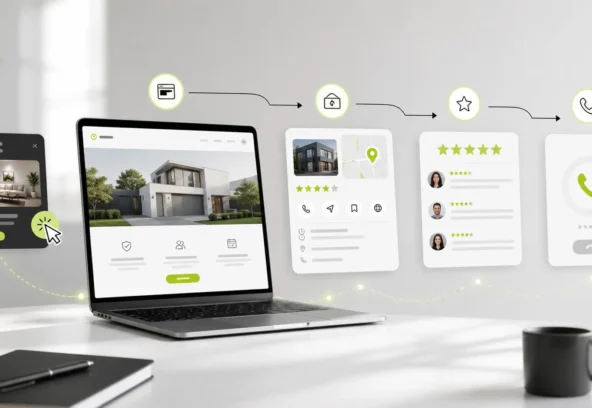
When someone clicks your ad, they usually do not decide instantly.
They start checking.
They look at your website.
They look at your Google profile.
They read reviews.
They compare you with other businesses nearby.
They look for signs that you are legitimate, current, responsive, and worth contacting.
This happens fast.
Not in a slow, careful, logical way.
In a quick, impression-based, comparison-driven way.
If the signals feel strong, trust goes up.
If the signals feel weak, unclear, outdated, thin, or inconsistent, trust drops.
And when trust drops, conversion drops with it.
The problem is not always visibility. It is often what visibility leads to
A business can be visible and still hard to choose.
That is the part many owners miss.
You can run ads.
You can get clicks.
You can show up on Google.
You can have a decent-looking business from the inside.
But if the buyer’s experience feels uncertain, the lead can disappear before you ever get the call.
This is why some local businesses keep increasing spend without fixing the deeper issue.
They are buying attention, but they are not building enough confidence around the decision.
What a trust problem actually looks like
Trust problems are rarely dramatic.
They are usually quiet.
That is why they are expensive.
Here is what they often look like in practice:
1. The website does not feel credible fast enough
Most visitors do not study every page.
They scan.
If the site feels outdated, thin, cluttered, generic, slow, confusing, or vague, confidence drops quickly.
Even if the service is good.
Even if the business is legitimate.
Even if the ad itself was strong.
A weak first impression creates friction before the conversation even starts.
2. The Google presence does not support the ad
A prospect clicks the ad, then checks Google.
Now they are looking for confirmation.
Do the reviews look real and recent?
Are the photos credible?
Does the business profile look active?
Do the rating and reputation support the promise in the ad?
If the ad says one thing but Google tells a weaker story, trust breaks.
3. The proof is too thin
Many businesses underestimate how much buyers need proof.
Not just claims.
Proof.
Reviews.
Visible results.
Clear service explanations.
Good photos.
Specific positioning.
Signs that other people already trusted this business and were glad they did.
Without enough proof, the buyer has to do more mental work.
And when buying feels mentally expensive, people delay or leave.
4. The business is hard to reach when intent is high
This is one of the most expensive leaks.
A person sees the ad.
They become interested.
They decide to call.
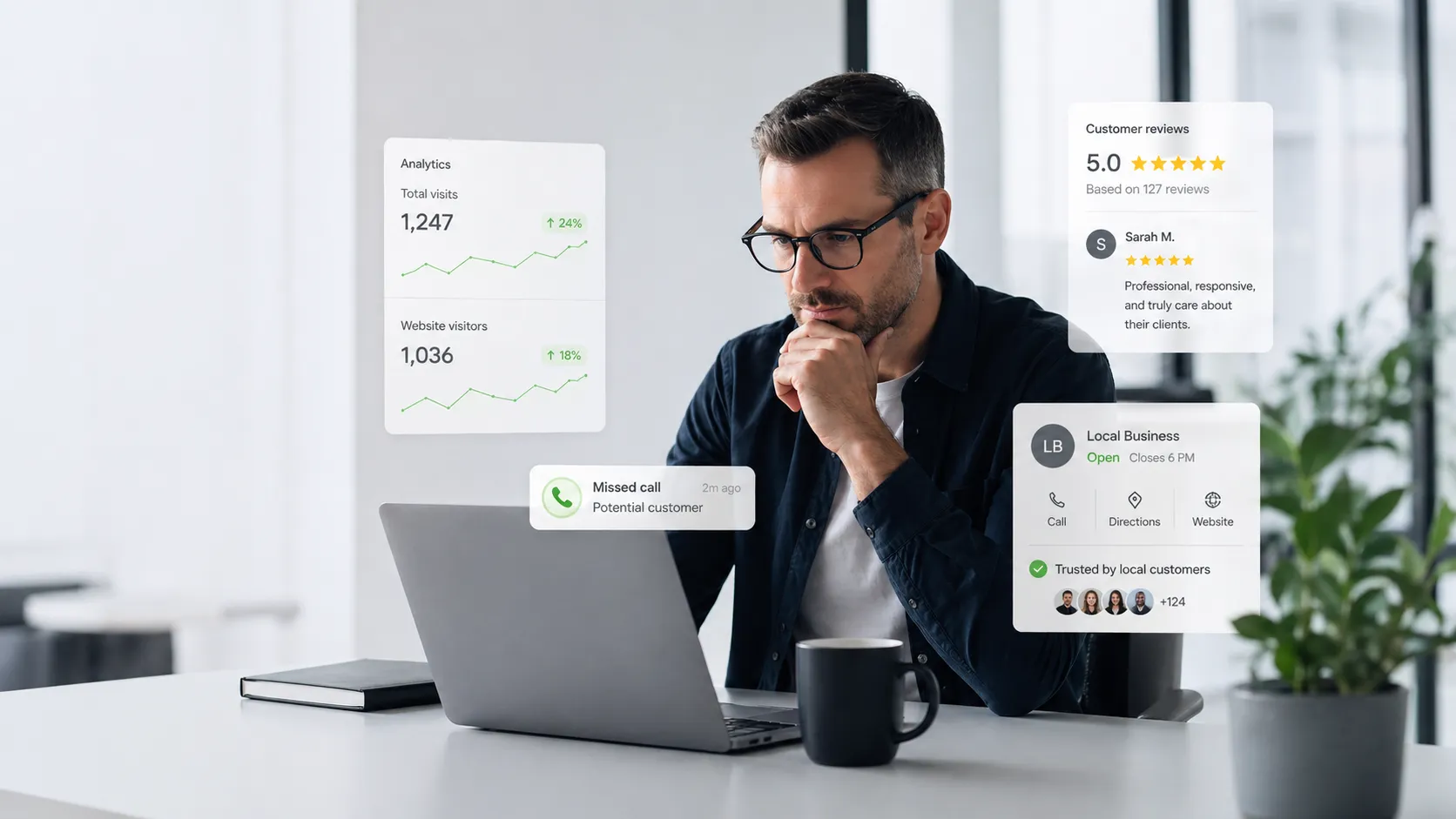
Nobody answers.
Or they call after hours and get nothing useful.
Or the response is slow.
Or the contact process feels inconvenient.
That lead was not low intent.
That lead was often ready.
But readiness has a time window.
If the business is not reachable when intent is high, conversion drops for a very simple reason: the buyer moves on.
Why this matters more for businesses already running ads
If your business is already investing in visibility, this issue matters even more.
Because attention costs money.
Every click has a price.
Every lead source has a cost.
Every campaign has a conversion expectation behind it.
So if your website, Google profile, proof, and responsiveness are not helping people feel safe choosing you, the business is not just missing a few leads.
It is wasting part of the attention it already paid for.
That is why this is not a branding detail.
It is not a cosmetic issue.
It is a conversion issue.
The hidden mistake: treating trust like a “nice to have”
Many local businesses treat trust signals as secondary.
They focus on getting the phone to ring, but they do not give enough attention to what shapes the buyer’s confidence before that call happens.
That is a mistake.
Trust is not separate from conversion.
Trust is part of conversion.
A clearer website helps people feel safer.
A stronger Google profile reduces doubt.
Better reviews reduce hesitation.
Faster response protects intent.
Consistent messaging makes the business feel more legitimate.
These are not soft improvements.
They affect whether the buyer moves forward or keeps looking.
How to tell if trust is the real leak
Here are a few signs the problem may not be traffic:
If several of these are true, the problem may not be that people are not seeing you.
The problem may be that they are not convinced enough to choose you.
The better question to ask
Instead of only asking:
“How do we get more traffic?”
A better question is:
“What happens after people click, check, compare, and try to reach us?”
That is where a lot of lost revenue hides.
Because the buyer journey does not end at the click.
That is where the real decision starts.
Final thought
You do not always have a traffic problem.
Sometimes you have enough visibility already.
What you do not have is enough trust, proof, and responsiveness across the places buyers check before choosing.
And that changes everything.
Because when trust is weak, more traffic often just means more wasted attention.
But when trust is stronger, the attention you already pay for has a better chance of becoming customers.
That is the real opportunity.
Not just getting seen.
Getting chosen.